
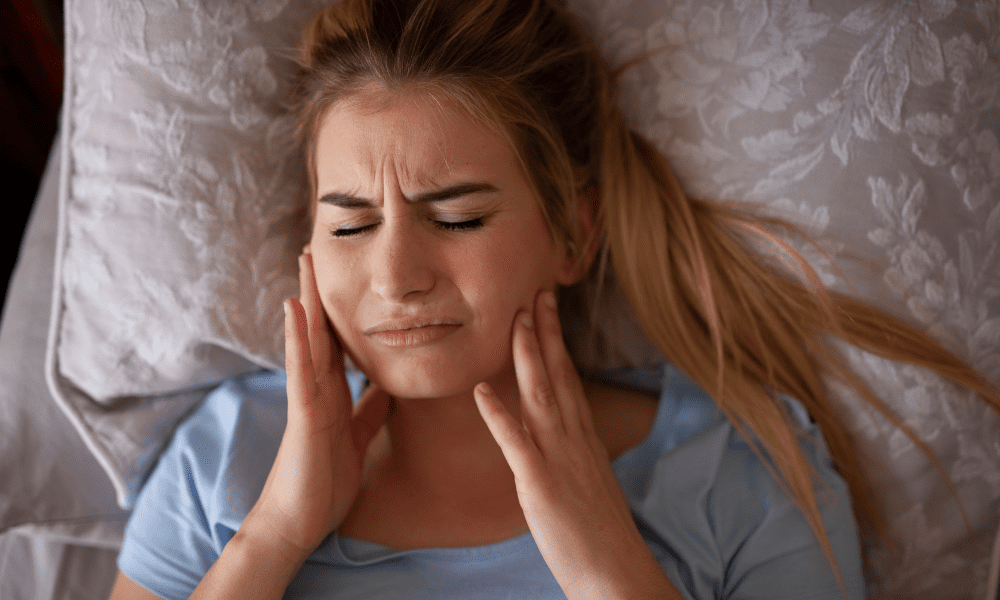
Understanding TMJ Disorder & TMJ Treatment Options
What Is TMJ Disorder
Temporomandibular Joint Disorder (TMJ Disorder) is a common health condition that affects more than 35 million people.
TMJ Disorder is not well understood by dentists and medical professionals, as they tend to see TMJD as a localized condition, when in most cases, the underlying cause of the TMJ symptoms, such as clicking, jaw pain, restricted jaw movement, headaches, migraines, and tinnitus are coming from other areas of the body that affect the temporomandibular joint.
TMJ Disorder, also known as TMD, is a general term that covers a wide array of symptoms involving the jaw joint (temporomandibular joint) and the surrounding muscles involved in chewing and opening & closing the jaw. The TMJ are the joints – one on each side of the face, that connect the jaw (mandible) to the head, and this joint structure is one of the most complex in the body.
There is a cartilage disc in the middle of the joint, which when it gets out of place, causes pain, restricted movement of the jaw, and potentially, a variety of other symptoms. As well, TMD is viewed as having involvement with many other systems in the body, including the cardiovascular, digestive, muscular, fascial, respiratory, and more. For such a small joint, it has a complex relationship with the rest of the body.
TMD is a relatively common disorder, with estimates of up to one-third of all adults experiencing it during their lifetime. More women than men experience it statistically, with women typically experiencing more severe symptoms than men. Children can develop TMD as well, with estimates of about 11% of kids developing TMD at some point during childhood.

TMJ Causes
The causes of TMJ Disorders can be varied, though many patients present with high stress levels and tight muscles in the head, neck, back, and hip areas, which affect the temporomandibular joint (TMJ) and it’s functioning, either directly or indirectly. When strain patterns alter the structure of the body, then function will inevitably be affected as well. When the functioning of any area of the body is altered, then the structure will become altered – structure and function go hand in hand.
If you have had previous injuries or accidents, even from many years ago, they could have settled into the body, causing misalignment of the cranial bones, which directly affects the structure and function of the TMJ. The head and face are comprised of a number of bones, including the maxillae (upper mouth), mandible (lower jaw), temporal bones (around the ears), sphenoid bone (forms part of the eye socket and connects with every other cranial bone). The TM Joint is directly formed by the temporal bone where it connects to the mandible.
Misalignment of other cranial bones can be involved as well, such as the sphenoid, frontal bone, temporal bones, occipital bone, or parietal bones. The TMJ Dysfunction results from these bones and muscles becoming disordered and out of sync in relation to one another.
Causes of TMJ Disorder are usually not just one thing, but rather a combination of imbalances, such as
- Injuries
- Accidents
- Trauma
- Arthritis
- Bruxism (grinding or clenching of the jaw or teeth)
- Autoimmune disease
- Chronic stress (big underlying contributor)
- Circulation issues
- Digestive disturbances
- Sleep problems
- Falls
- Bite pattern, teeth misalignment (malocclusion)
- Strain patterns in other areas of the body
- Postural distortion
- Infection
- Whiplash injuries
- Medication side effects
- Dental procedures
Through CranioSacral Therapy, the strain patterns can be released and then the structure will return to a more proper alignment, with the result of restored function as well.
In many cases, the spheno-basilar complex can become affected as well (from behind your eyes to the back of your head), which can bring about additional symptoms, such as Headaches, Migraines, Tinnitus, Vertigo, Back & Neck Pain. The many muscles in the neck and jaw will typically be involved, such as the masseter muscle (chewing), temporalis, sternocleidomastoid (SCM), scalene muscles, trapezius muscles, and suboccipital muscles.
These stress patterns in the muscles can cause pressure on the vertebra, the nerve roots that traverse from the spine out to the body, which can also cause dysfuntion in the cranium which houses the nervous system that “runs” the body, causing all sorts of potential symptoms. Digestive symptoms, heart palpitations, changes in sleep patterns, increased anxiety, balance issues, decreased energy, depression, lack of focus – all these symptoms could become noticeable or increase due to strain patterns affecting your TMJ.
As well, the cranial nerves could become compressed (entrapped), such as the trigeminal nerve, the facial nerve, the vagus nerve, just to mention a few.
TMJ Dysfunction Symptoms
- Jaw pain
- Restricted movement of the jaw
- Clicking, popping when moving the jaw
- Aching in surrounding areas
- Headaches or Migraines
- Neck, shoulder, or back pain
- Pain and difficulty when chewing
- Toothache
- Teeth grinding
- Jaw clenching
- Pain in or around the ears
- Ringing in the ears (Tinnitus)
- Dizziness
- Vision changes
TMJ Pain

TMJ Pain
While the primary symptom of TMJ Disorder is jaw pain, TMJ Pain can also spread into other areas well beyond your jaw, including to your face, ears, eyes, forehead, neck, shoulders, and back. TMJ Pain can vary in severity, and can come and go, sometimes related to stress levels, sleep patterns, posture, and other factors.
If you’ve had jaw pain that has come and gone, but now you’re experiencing headaches, a stiff neck, tinnitus (see below), sleep pattern changes, hearing changes, dizziness, or vision changes, your TMJ Pain may be contributing to these new symptoms.
TMJ and Headaches

TMJ related headache
While you may not think about your jaw being the cause of your headache, in fact, TMJ is a common contributor to headaches. The muscles of the TM Joint run along your cheeks and jaw, and if these muscles are tight, or out of balance with one another, they can cause headaches. And if you grind your teeth, which many people with TMJ Dysfunction do, that can add to the tension and strain in the jaw muscles – which can also contribute to headaches.
Symptoms of TMJ and Headaches that are caused by TMJ Dysfunction can include
- Jaw pain or pain in other areas of your face
- Tight muscles in your jaw or face
- Limited movement of your jaw
- Noises, such as clicking in your jaw
- Changes in your bite, such as biting your tongue, or the inside of your cheek when chewing
TMJ and Migraines

Your TMJ may be to blame for your Migraine, especially if you’re experiencing your Migraine symptoms on one side of your head. The muscles that open and close your jaw run along the side of your face, and if these muscles are tight, stiff, or out of balance, they could be putting pressure on the trigeminal nerve, which can cause a Migraine.

TMJ and Tinnitus

Tinnitus
Many cases of Tinnitus are related to aging, however TMJ Disorder can also play a role in causing Tinnitus, usually affecting young people, under the age of 50. A PubMed Study found that Tinnitus was found more often in people who had TMJ Dysfunction than those without TMJ Dysfunction, which may be due to the near proximity of the ear to the jaw.
Inside the ear, the cochlea (the part of the ear that transforms sounds to electrical impulses that the brain then translates into recognizable sounds) may become damaged from tension and strain related to TMJ Dysfunction, thereby causing Tinnitus and other distortions in the functioning of the ear.
Diagnosing TMJ
Your doctor will do a physical exam, ask you about your symptoms, their severity and duration, and ask about your health history. Bloodwork will likely be ordered, and your doctor may order scans (X-rays, CT scan, or MRI) to determine if any structural abnormalities are present.
TMJ Treatment – Providing Quick Relief & Lasting Results
Ready to address the cranial and temporal bone restrictions underlying your TMJ disorder?
Learn about our comprehensive TMJD treatment approach.
TMJ Dysfunction Specialist
Sandy Schell, CST, specializes in relieving TMJ Dysfunction in Tampa, St Petersburg FL, and the surrounding communities through utilizing gentle, safe, and effective CranioSacral Therapy techniques, Myofascial Release, and Vagus Nerve Balancing. By releasing restrictions in the cranium, the head, neck, jaw, and other relevant areas of the body, many patients suffering from TMJ Dysfunction have experienced major improvements in their symptoms, including decreased pain and clicking, and increased movement and comfort throughout the jaw, the neck, and other areas of the body.
CranioSacral Therapy can typically provide a good amount of relief of TMJ Dysfunction. CranioSacral Therapy is gentle, yet effective in uncovering and relieving soft tissue strain patterns in the body that contribute to TMJ Dysfunction.
All of our experiences are stored in the body. If we grind our teeth at night, sit at a computer all day, have high levels of stress in our life, have had previous injuries or accidents, all of these experiences are stored in the body, and can create strain patterns that lead to TMJ Disorder.
CranioSacral Therapy can help to relieve these strain patterns that are causing your pain and other symptoms.
6 Ways CranioSacral Therapy Can Help TMJ Dysfunction
- Decrease the tension in the muscles around the jaw
- Release the tension in the TM Joint, as well as the maxillae (top of your mouth/jaw)
- Balance the function and movement of your jaw
- Release the pressure on the Trigreminal Nerve and other nearby nerves
- Release tension patterns at the base of the head that relate to the TM Joint
- Release tension patterns in the neck, shoulders, and any other areas that may be contributing to your TMJ Pain
6 Benefits Of CranioSacral Therapy For TMJ Disorder
- Decreased pain
- Increased movement of the jaw
- Increased relaxation
- Better sleep
- Better energy levels and stamina
- More enjoyable and fulfilling daily life
As with all therapies and protocols, each person responds differently with the use of CranioSacral Therapy. Health status, chronic disease, medications, previous illnesses, and previous injuries are all factors in outcomes. Please call for a complimentary consultation to discuss your particulars and goals.

Hi, I’m Sandy Schell, a Certified CranioSacral Therapist with 20+ years experience. As an Advanced Level Therapist, I’ve helped people with a wide variety of health conditions. My primary focus is CranioSacral Therapy, although I will also combine other modalities as necessary into a session, such as Myofascial Release, Reiki, Grid Balancing, Vagus Nerve Balancing.
CranioSacral Therapy St Petersburg FL has a long, proven track record of being able to restore health and vitality by focusing on the core elements that “run” the body – the nervous system, it’s fluids, rhythms, and fascia (connective tissue).
CranioSacral Therapy is based in Osteopathic Medicine, and dates back to the early 1900’s. It’s safe, effective, and results-oriented.
The proper functioning of your nervous system is vitally important to your health and well-being. Your nervous system is based in communication, which happens through the cells, the energetic impulses, the fluids, and the connective tissues of the body. Having clear, strong, healthy communication, energy, and fluid movement is what underlies a health body. By focusing on the nervous system, a properly trained, experienced CranioSacral Therapist can release stress patterns at the causative level, resulting in symptoms disappearing once balance and communication throughout the body are restored.
Musculoskeletal tightness, neurological imbalances, autoimmune disease, many types of pain, and organ dysfunction are some of the many categories of health conditions that typically respond well with CranioSacral Therapy.
Please call for a complimentary consultation to discuss your particulars and goals.
Last Updated on 01/04/2026 by Sandy Schell
About The Author
